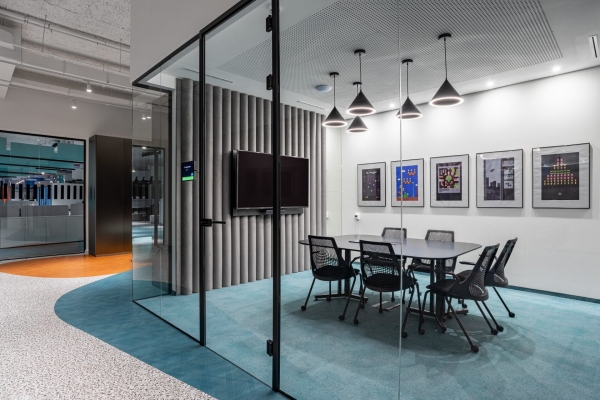
Hybrid Office Design
Hybrid office design is a workplace concept that addresses the needs of employees who work both in the office and remotely. The main focus of this approach is on bookable desks, flexible work zones, and ensuring that employees can work comfortably regardless of where and how they work.
Furniture selection, space planning, technology integration, and the overall work environment should be organized in a way that both in-office and remote employees can experience a unified and seamless working experience.
The hybrid workplace is based on a people-centric approach and requires companies to move away from traditional, fixed work models toward more flexible and modern ways of working.
Advantages of Hybrid Office Design
A properly designed hybrid work environment provides the following benefits for companies:
- Increases employees’ motivation to come to the office
- Enhances collaboration and productivity in the workplace
- Improves work-life balance and employee well-being
- Strengthens job satisfaction and organizational commitment
- Helps attract new talent and retain existing employees
6 Key Principles of Hybrid Office Design
With the growing interest in flexible work models, hybrid workplaces have become an essential part of modern organizations. The following principles should be considered when designing an effective hybrid office.
1. Create Diverse Work Zones
When planning a hybrid office, different functional zones should be designed to support various working styles. These zones include:
- Open workspaces with bookable desks
- Meeting rooms for confidential discussions
- Collaboration rooms with large tables for team work
- Soundproof individual pods for focused tasks
- Booths with seating and power outlets for informal meetings
- Training rooms equipped with digital boards and screens
- Breakout areas for rest and social interaction
- Common kitchen or café spaces
- Video conferencing rooms for remote communication
This layout increases productivity and creates a flexible environment suitable for different work scenarios.
2. Prioritize Flexibility and Adaptability
One of the core principles of hybrid offices is flexibility. Workspaces should quickly adapt to varying occupancy levels. For example, the office may be fully occupied at the beginning of the week and significantly less crowded toward the end. Additionally, spaces may need to be quickly reconfigured for company events, training sessions, or team meetings.
Common solutions include:
- Modular office furniture
- Movable partitions
- Sliding or foldable wall systems
- Wheeled desks and storage units
- Full-height curtains for temporary meeting zones
These solutions enable the office to adapt easily to changing work patterns.
3. Integrate Smart Technologies
Technology plays a key role in modern hybrid offices. The goal is to ensure that all employees have easy access to information, tools, and communication systems regardless of where they work.
Common technologies include:
- Online booking systems for desks and meeting rooms
- Occupancy sensors and space analytics
- Smart space management systems
- Video conferencing equipment
- Cloud-based collaboration platforms
These technologies make work processes more efficient and seamless.
4. Support Employee Well-being and Productivity
In modern hybrid office design, employee comfort is a top priority. The office environment should be as comfortable and appealing as working from home. For this reason, ergonomic furniture is especially important.
Companies may implement the following solutions:
- Fully adjustable ergonomic chairs
- Height-adjustable desks
- Maximum use of natural light
- Efficient temperature and ventilation control
- High-quality air circulation systems
- Plants and biophilic design elements
These factors improve employees’ physical comfort and positively impact overall job satisfaction.