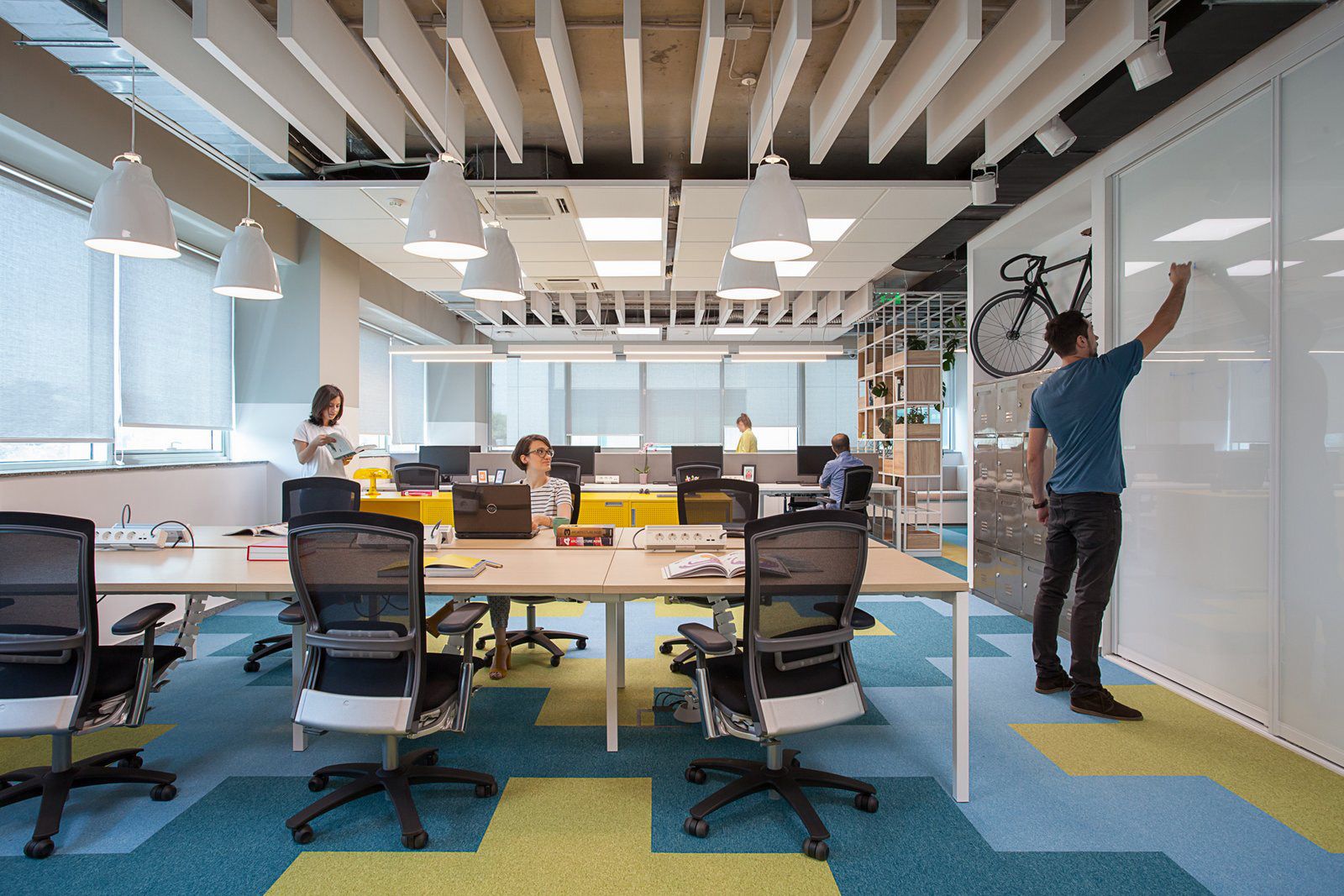
Let’s take a look at some of the most common office productivity problems and practical ways to address them.
Difficulty Navigating the Workspace
In larger offices, employees and visitors may have difficulty finding meeting rooms, departments and other areas. Unclear pathways and poorly organised workspaces can lead to unnecessary time loss and make everyday tasks more difficult.
The Solution
Office furniture and workstations should be arranged to allow comfortable movement throughout the workspace. Meeting rooms and key areas can be clearly labelled. In larger offices, floor plans and directional signs can also help visitors and new employees navigate the workplace more easily.
Difficulty Finding the Right Employee
Hybrid working, flexible workspaces and constantly changing seating arrangements can make it difficult for employees to find each other. This can result in delays in meetings and collaborative tasks.
The Solution
Workspaces should be organised in a way that supports communication between teams and departments. Employees who regularly work on the same projects can be positioned closer to one another where appropriate. Digital communication tools can also make collaboration faster and more convenient.
Poor Meeting Room Planning
Meeting rooms that are not properly scheduled can create unnecessary delays. Double bookings or a lack of suitable meeting spaces can interrupt the normal workflow and make it difficult for employees to organise their workday.
The Solution
Using a meeting room reservation system can help employees check availability and schedule meetings in advance. The size and purpose of each room should also be considered. Smaller spaces can be used for short discussions, while larger meeting rooms can be reserved for presentations or group meetings.Broken Office Equipment
Problems with computers, printers and other office equipment can quickly interrupt daily operations. When essential equipment stops working, employees may have to pause their tasks until the issue is resolved.The Solution
Regular maintenance of office equipment can help prevent unexpected disruptions. Where possible, essential backup equipment should also be available. An internal system for reporting technical problems can help ensure that issues are communicated and resolved as quickly as possible.Problems with Visitors
When clients or business partners visit an office, difficulties with entering the building, finding meeting rooms or accessing essential information can affect the efficiency of the meeting. A comfortable visitor experience also contributes to a professional company image.The Solution
Having a clear procedure for receiving visitors can make the process more organised. Meeting rooms should be prepared in advance, while visitors can be provided with useful information such as Wi-Fi access and basic directions. This helps reduce unnecessary delays and creates a more welcoming environment.Workplace Distractions
Noise, frequent movement, conversations and an unsuitable office layout can easily distract employees. Continuous interruptions may affect concentration, work quality and the time required to complete tasks.The Solution
Workstations can be positioned away from areas with heavy traffic and excessive noise. Creating quiet working zones can also help employees concentrate when they need to focus. In addition, appropriate office furniture, lighting and workspace organisation can contribute to a more comfortable and focused working environment.Conclusion
A productive office is created not only through modern technology but also through a well-organised and comfortable workspace. Choosing the right office furniture, equipment, stationery and everyday workplace products can contribute to employee comfort and more efficient workflows.Identifying common office problems in advance and choosing appropriate products and organisational solutions can help businesses create a more comfortable, functional and productive workplace.